Technology
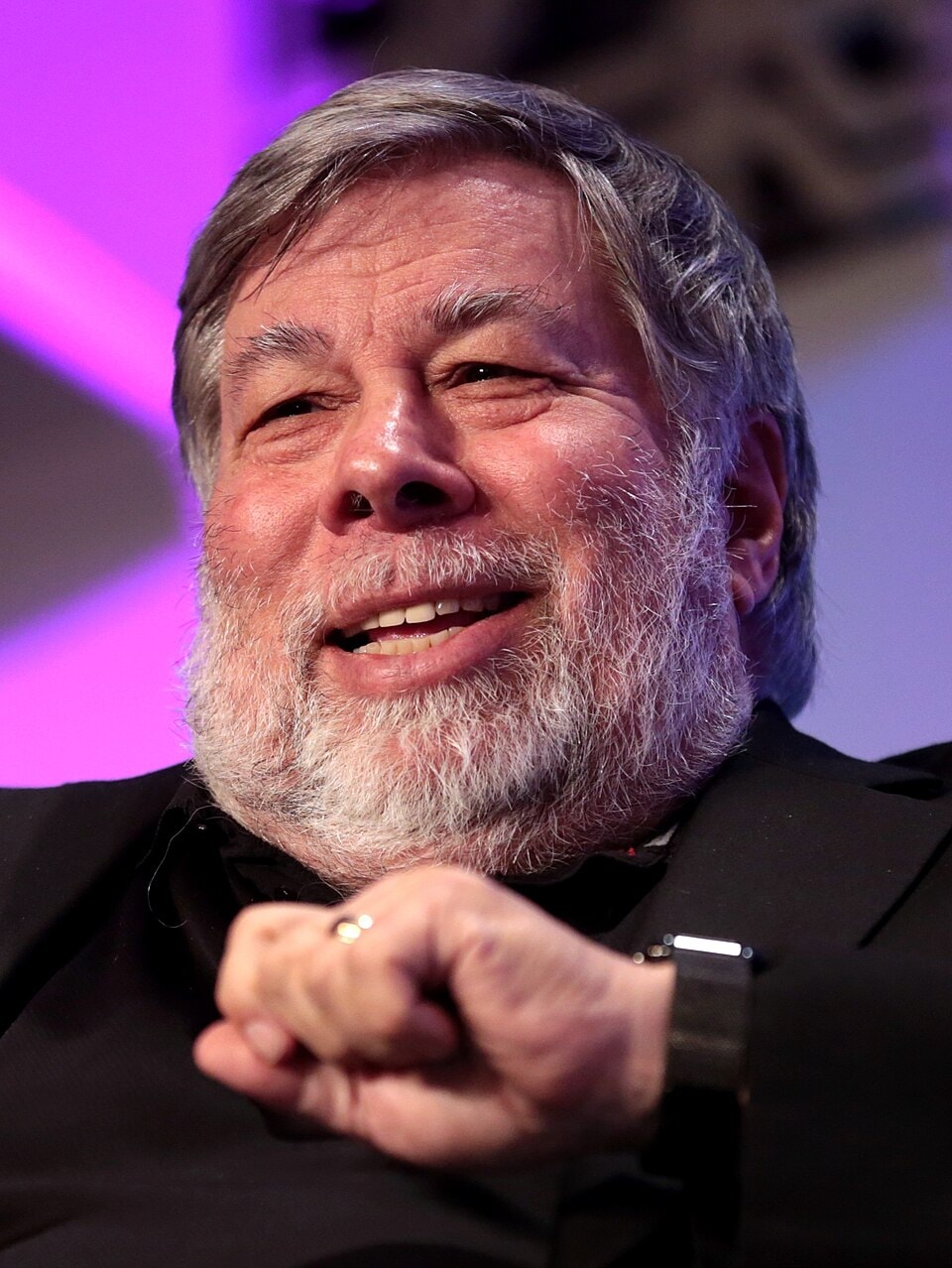
Steve Wozniak
Apple Co-Founder · Engineer · Inventor
Curiosity & Innovation
The Engineer Who Helped Put a Computer on Every Desk
Steve Wozniak — universally known as "Woz" — is one of the defining engineers of the personal-computing revolution. In 1976, Wozniak co-founded Apple Computer with Steve Jobs and Ronald Wayne. But his importance goes far beyond the title of co-founder: Wozniak personally designed the Apple I and became the principal engineering force behind the Apple II, the machine that helped transform personal computers from a hobbyist pursuit into a mass-market industry. His career has always been distinguished by a particular philosophy of technology: engineering should make complicated things simpler, more accessible and more human.
Key Milestones
Co-founded Apple Computer
Founded Apple alongside Steve Jobs and Ronald Wayne.
Apple I
Designed the Apple I, the computer around which the original Apple business was formed.
Apple II
Designed the Apple II, one of the most influential early mass-market personal computers.
UC Berkeley
Returned to the University of California, Berkeley and completed his degree in electrical engineering and computer science.
An encounter that became part of my continuing interest in technology, engineering, and the importance of retaining humanity as technology becomes increasingly powerful. What stayed with me was not the scale of what he had built, but the quality of his curiosity — the sense that the most interesting questions are still the ones that begin with genuine wonder rather than commercial ambition.
Innovation becomes most meaningful when technical possibility remains connected to human curiosity.

Public Leadership
Sarah Palin
Former Governor of Alaska · 2008 Republican Vice-Presidential Nominee
Conviction & Resilience
From Alaska to the Center of American Politics
Sarah Palin became one of the most instantly recognizable political figures in the United States during the 2008 presidential election. Her political career began locally in Wasilla, Alaska. In 2006, Palin made Alaska history when she was elected the state's first female governor. Two years later, Senator John McCain selected her as his running mate in the 2008 presidential election. She became the first woman ever nominated for vice president by the Republican Party. Whatever one's political perspective, Palin's rise represented an unusual American political trajectory: from small-town government in Alaska to one of the most watched presidential campaigns in modern American history.
Key Milestones
Wasilla City Council
Entered elected public office in Wasilla, Alaska.
Mayor of Wasilla
Won the mayoralty and served until 2002.
Governor of Alaska
Became the first woman elected governor of Alaska.
Vice-Presidential Nominee
John McCain selected Palin as his running mate, making her the Republican Party's first female vice-presidential nominee.
An encounter that prompted reflection on leadership, public scrutiny, and the personal consequences of living in public life. Whatever one's political perspective, the experience of navigating intense public visibility while maintaining a coherent sense of self is a subject worth understanding. Conviction, I came to appreciate, is not the same as certainty — and resilience is not the same as stubbornness.
Public leadership taught me to think not only about conviction, but about the responsibility that accompanies visibility.

Markets
Paul Tudor Jones II
Founder, Tudor Investment Corporation · Global Macro Investor · Philanthropist
Risk & Discipline
One of the Defining Macro Traders of His Generation
Paul Tudor Jones II is one of the best-known figures in modern hedge-fund and global macro investing. In 1980, he founded Tudor Investment Corporation. His reputation became closely associated with macro trading — interpreting the interaction between interest rates, currencies, commodities, equities, economic cycles and investor psychology. Jones became particularly famous for anticipating and successfully navigating the 1987 market crash known as Black Monday. In 1988, he helped establish the Robin Hood Foundation, which became a major philanthropic organization focused on fighting poverty in New York City.
Key Milestones
University of Virginia
Graduated with a B.A. in Economics.
Tudor Investment Corporation
Founded the investment firm that would establish his reputation in global macro trading.
Black Monday
Became famous for anticipating and successfully trading around one of the most dramatic market crashes in Wall Street history.
Robin Hood Foundation
Helped establish what became one of New York City's most prominent anti-poverty philanthropic organizations.
Survival comes before profit. Great investing is not simply about predicting what happens next. It is about understanding what happens if you are wrong.
An encounter that deepened my thinking about risk management, intellectual humility, and the difference between conviction and stubbornness. The discipline required to survive in markets over decades is not primarily about prediction — it is about the willingness to be wrong and the structure to absorb that without losing the ability to act again.
Markets have a way of punishing certainty. Discipline is what allows conviction to survive uncertainty.

Global Capital
Laurence D. Fink
Co-Founder, Chairman & CEO of BlackRock
Scale & Long-Term Thinking
The Architect Behind the World's Largest Asset Manager
Laurence D. "Larry" Fink is one of the most influential executives in global finance. After earning both his bachelor's degree and MBA from UCLA, Fink began his career at First Boston, where he became a managing director and member of the firm's Management Committee. In 1988, Fink and seven partners founded the business that would become BlackRock. What began as an investment operation built around institutional asset management and rigorous risk analysis grew under his leadership into a global investment and technology organization. Today, BlackRock manages more money than any other investment company in the world.
Key Milestones
UCLA
Earned a B.A. from the University of California, Los Angeles.
UCLA Anderson
Earned an MBA.
First Boston
Rose to Managing Director and became a member of the Management Committee.
BlackRock
Co-founded BlackRock with seven partners.
An encounter that expanded my thinking about institutional capital, long-term responsibility, and the relationship between large pools of capital and the broader world they operate within. The question of what capital is ultimately for — and what obligations come with managing it at scale — is one that I find increasingly important as the scale of global financial systems continues to grow.
The larger the pool of capital, the more important the question becomes: what kind of future is that capital helping to build?